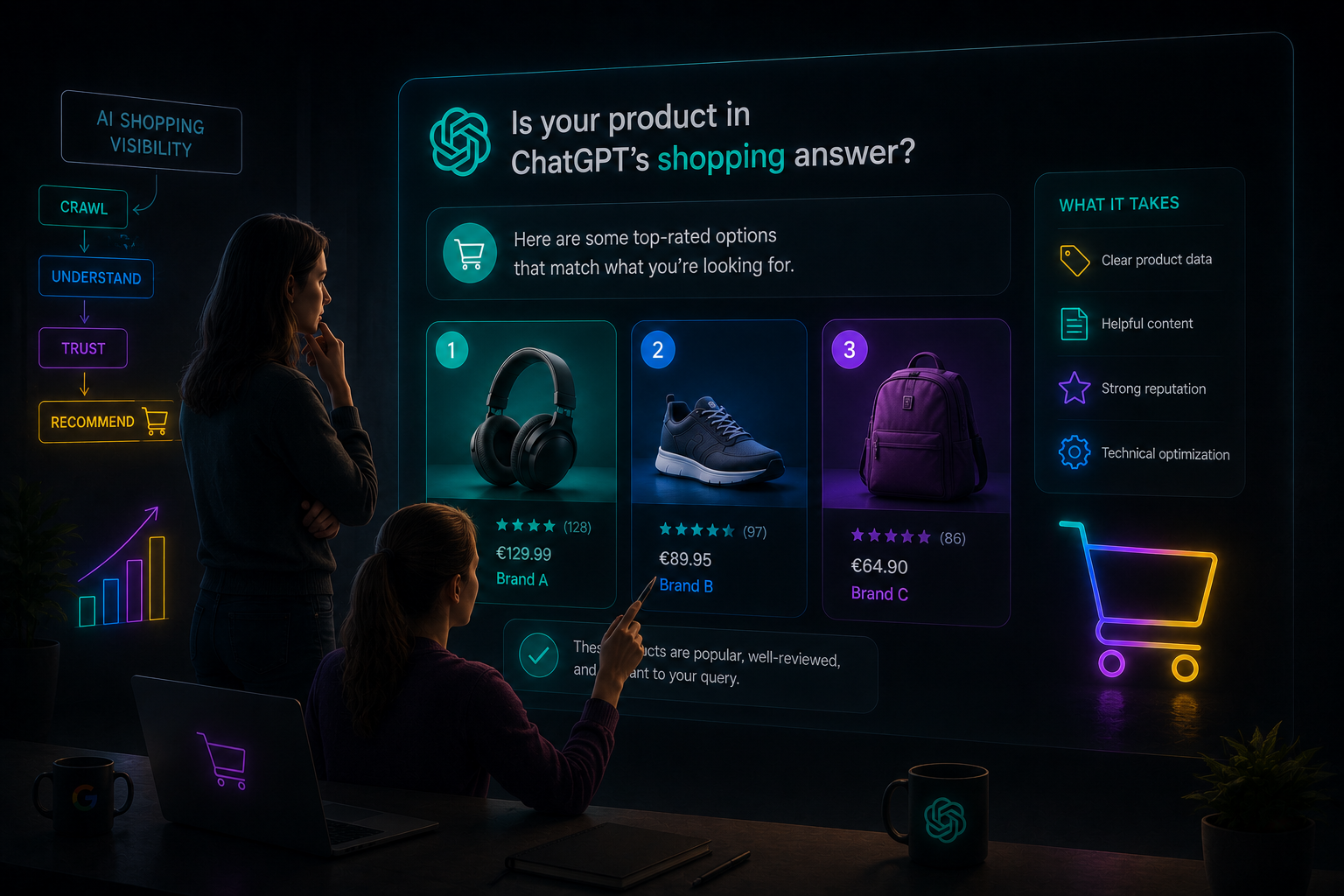

You spent years making the shop work in Google. Titles, descriptions, categories, a clean product page. Then a customer never types your domain. They open ChatGPT and ask: best LED strip for a kitchen under 50 euros. A short list appears. Your product is not on it.
That is no longer a niche habit. According to McKinsey’s Consumer AI Discovery Survey (December 2025), cited by Precis, 63% of European consumers already use AI to compare brands, models, prices and reviews. Almost half use it to discover what to buy. OpenAI reports tens of millions of monthly search users in the EU alone. For a WooCommerce shop, the question is simple: when someone asks an assistant instead of a search box, do you exist in the answer?
The useful surprise from 2026 research is that ChatGPT is not inventing a secret product catalogue. When a prompt looks like shopping, it often builds a carousel by sending extra “fan-out” queries to Google Shopping. Semrush tested this in January 2026. In their sample, the top product in ChatGPT’s carousel sat in Google Shopping’s first three organic results 75% of the time. A larger Peec AI analysis, presented with Precis in June 2026, went further: every product they saw in ChatGPT Shopping could be explained by Google Shopping’s top 40 organic results for the matching query. Search Engine Land reported a similar pattern in March 2026: more than 80% of carousel products matched that Google Shopping set.
Two practical consequences follow.
First, paid Shopping ads do not buy you a seat in that carousel. The research is clear that ChatGPT looks at organic results, not sponsored ones. Budget on ads can still sell on Google. It does not automatically put you in the chat.
Second, ChatGPT does not copy Google’s order 1:1. It re-ranks. Peec AI found products typically move about five places. Attributes in the title and description — material, use, size, durability, who it is for — matter. Vague copy such as “high quality LED strip, best price, fast shipping” gives the model almost nothing to match against a real shopper question.
So what should a shop manager actually do, without becoming an AI researcher?
Keep the Merchant Center feed healthy if you use Google Shopping: stock, price, identifiers, and titles that match how people ask. That is still the front door for many carousels.
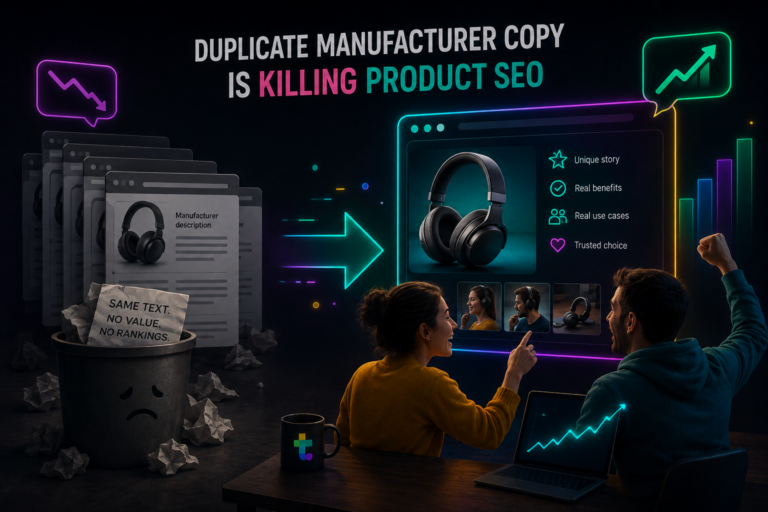
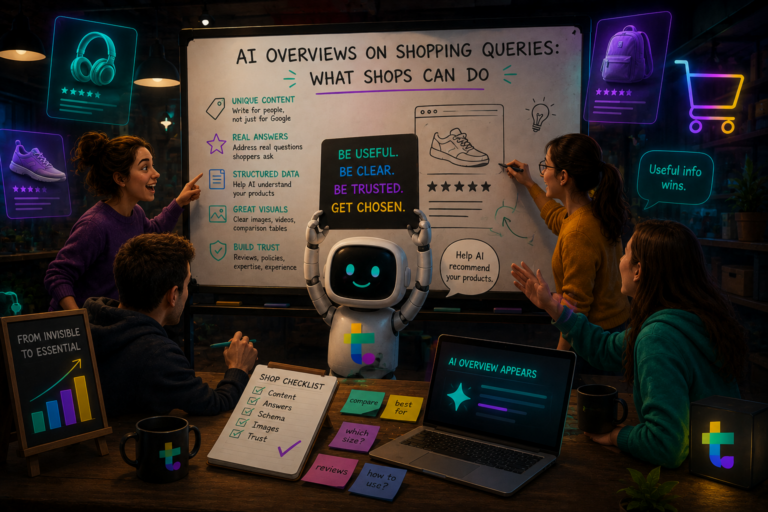
Then look at the product page itself. Assistants still read the public web. A page that answers what it is, what it fits, what it is not, and how it differs from the cheap alternative is easier to cite than a three-line manufacturer dump from 2019. Unique facts beat synonym stuffing. Internal links to the right category help both Google and a model that is trying to understand the catalogue.
You can check this without a laboratory. Take five real buyer questions for one hero product. Ask them in ChatGPT, Gemini and Claude. Write down whether your brand name, SKU or URL appears, and who sits above you. Repeat in a month after you improve the listing. That is more honest than a screenshot of a lucky prompt.
TraFixi can run a similar check from WordPress: locked shopping questions and a TOP-N look at whether your product shows up. Use it as a scoreboard, not as a promise that an assistant will recommend you.
Google is not finished. ChatGPT is not a replacement for Search Console. The shops that stay visible will treat both as one job: clear product data, pages that answer the question, and a habit of looking at the answer the customer actually sees.
If your best SKU never appears in that answer, the problem is not “AI magic”. It is that the listing still talks like a warehouse label, while the shopper already talks like a person.